


There's a particular feeling when you put on a mulmul cotton dress in June, step outside into Indian summer humidity, and realise — wait, I'm not immediately miserable. This is fine. I might actually be okay.
That feeling has a 3,000-year history behind it. Mulmul (also written mul mul, mulmal, or malmal, because Indian textiles have never cared about consistent spelling) is one of the oldest cotton weaves in the subcontinent. It's also, quietly, one of the most sophisticated.
And it is absolutely not the same thing as regular cotton. Here's why that matters.
What Mulmul Actually Is
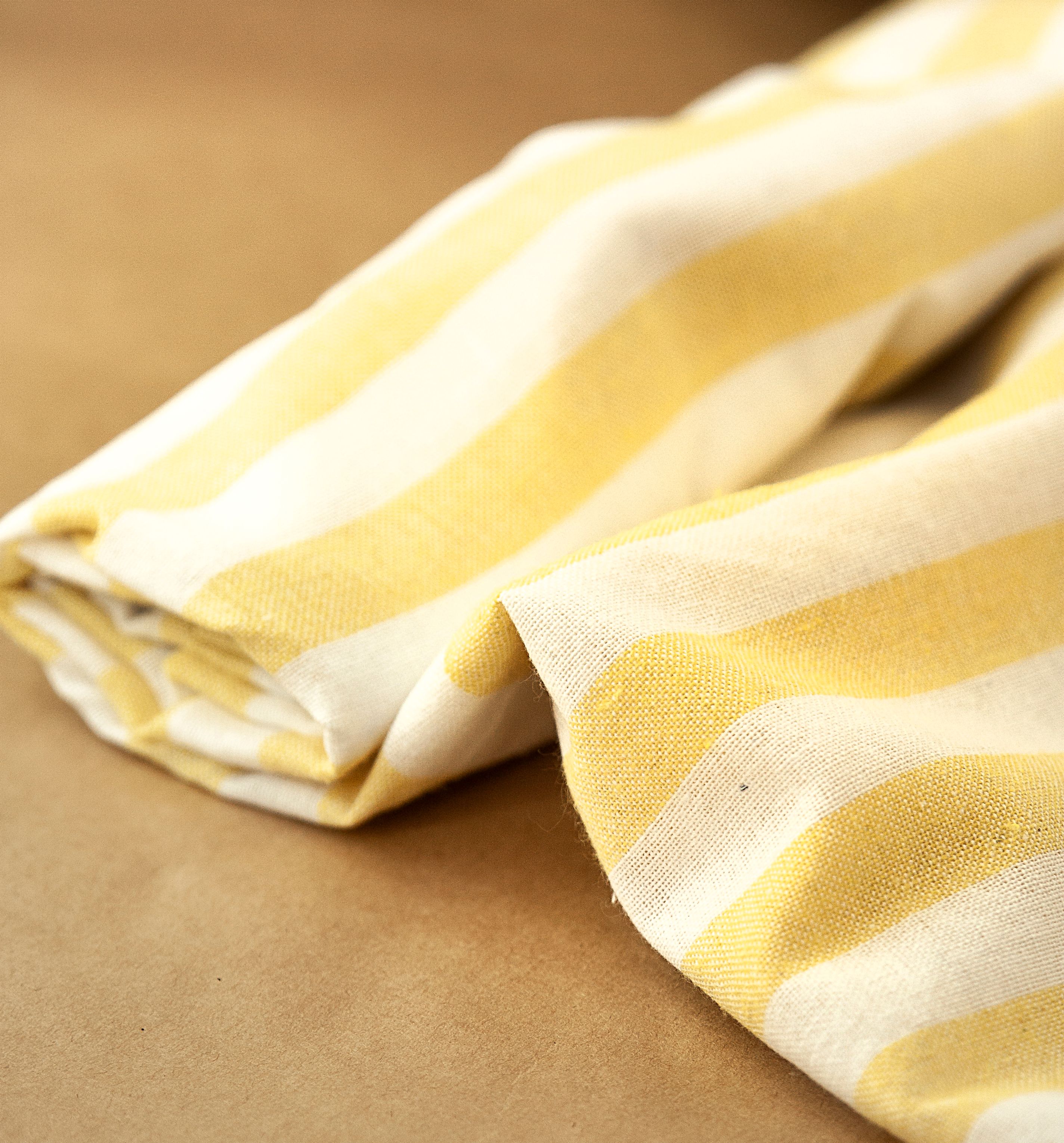
Mulmul is a plain weave cotton fabric made from very fine yarn — typically 60s to 100s count (the count refers to the fineness of the thread; the higher the number, the finer the yarn). The resulting fabric is lightweight, sheer, and has a distinctive soft drape that regular cotton doesn't achieve.
The name is thought to derive from the Persian or Arabic word for muslin — which is itself a reference to Mosul, the city the fabric was historically associated with. India's own version, particularly from Bengal and Dhaka, became famous as Dhaka muslin, or "woven air" — fabric so fine it was said a full saree could pass through a finger ring.
Modern mulmul is not quite that extreme, but the principle is the same: exceptionally fine weave, exceptional lightness, exceptional breathability.
Mul cotton is the same thing with a different name — the terms are used interchangeably across different regions of India. Mul cotton dresses, mulmul cotton dresses — you're looking at the same fabric.
How Mulmul Differs From Regular Cotton
This is the part most fabric labels don't explain. Both are cotton. Both say "100% cotton." But the difference in wearing experience is significant.
| Property | Regular Cotton (150–200 GSM) | Mulmul Cotton (60–90 GSM) |
|---|---|---|
| Weight | Medium | Very light |
| Feel | Firm, structured | Soft, drapey |
| Transparency | Opaque | Semi-sheer to sheer |
| Breathability | Good | Excellent |
| Wrinkle behaviour | Wrinkles and holds | Wrinkles softly, falls out |
| Best for | Structured garments, work | Flowing dresses, summer layers |
The key difference is the GSM (grams per square metre). Regular cotton dress fabric is typically 150–200 GSM. Mulmul sits at 60–90 GSM — roughly half the weight. That's the difference between the fabric you can feel on your skin versus the fabric you forget is there.
Why Mulmul Is Made for Indian Summers
Here's the thing about cotton's breathability: it's not just about the fibre. It's about the weave density. Mulmul's very open weave allows significantly more air movement than a denser cotton fabric.
In practical terms: on a 38-degree day in Chennai or Jaipur or Mumbai, mulmul doesn't just let air in — it actively allows body heat to escape. Sweat evaporates faster because the fabric itself is barely there. The result is that you stay cooler for longer and feel less damp, even on the worst days.
This is why mulmul has been worn in the Indian subcontinent for so long. It's not tradition for tradition's sake. The physics of the fabric are genuinely suited to the climate, in a way that synthetic fabrics — which trap heat by design — can never match.
The Sheerness Problem — How to Deal With It
This is the honest part. Mulmul is sheer. Not always dramatically so, but usually enough that wearing it without a lining or underlayer is going to be a choice you'll reconsider when you step into bright light.
Buy lined mulmul. Good mulmul dresses will have a cotton inner lining sewn in — usually a slightly heavier cotton slip. This solves the sheerness completely while keeping the outer fabric's drape intact. Always check the product listing for lining before buying.
Layer with a slip. A cotton slip underneath a mulmul dress works perfectly and gives you flexibility — you can change the slip's colour to play with the look.
Embrace the layered look. A mulmul dress over wide-leg cotton trousers or a fitted inner is a legitimate styling choice. Many contemporary Indian fashion labels have built entire aesthetic identities around this exactly.
Understand your light conditions. Mulmul indoors reads differently from mulmul in direct sunlight. What looks opaque in a dim room may become quite transparent outside. Know this before you leave the house.
How to Care for Mulmul Cotton
The good news: mulmul is easy to wash. The news that requires attention: easy to wash does not mean careless to wash.
Hand wash in cold water. Mulmul's delicate weave doesn't love aggressive machine action. A cold-water hand wash preserves both the weave structure and the softness. If you must machine wash, use the most gentle cycle available, inside a mesh laundry bag.
Never wring. Wringing twists the delicate fibres and distorts the weave. Press the water out gently, then let it drip.
Dry flat or hang with care. Mulmul is heavy when wet (even though it's light when dry), and hanging it dripping-wet can stretch the fabric at the shoulders. Either lay flat to dry or hang once most of the water has dripped out.
Iron on medium, while slightly damp. Mulmul irons beautifully — the fabric smooths out easily and holds the press well. Don't iron when completely dry; a little dampness helps.
Expect shrinkage on the first wash. A 3–5% shrinkage on the first wash is normal for mulmul. If you're buying online, factor this into your size decision — or order slightly larger and wash before wearing.
What to Look for in a Mulmul Cotton Dress
Check for even weave. Hold the fabric up to the light — the weave should be consistently open and even, not patchy or dense in places. Uneven weave suggests inconsistent yarn quality.
Feel the softness. Good mulmul is immediately, obviously soft — not scratchy or stiff. If it feels rough, it's either not true mulmul, or the fabric hasn't been properly finished.
Look for lining in the bodice at minimum. A completely unlined mulmul dress is a transparency risk. Good construction includes at least a partial inner lining.
Check the construction of the seams. Mulmul's fine weave can fray at raw edges. Well-made mulmul dresses use French seams, or at minimum finished seams that won't unravel after washing.
The price should reflect the fabric. Genuine fine mulmul costs more than standard cotton fabric. A ₹500 "mulmul dress" is probably not mulmul. A well-made mulmul dress in the ₹2,500–₹5,000 range is more realistic.
Mulmul vs. Other Lightweight Fabrics — A Quick Guide
Mulmul / Mul cotton: Lightweight, soft, slightly sheer, breathes exceptionally well. Distinctly Indian in origin and association. Best for casual-to-smart casual summer dresses.
Cambric cotton: Similar weight to mulmul but slightly crisper, less sheer. Used in kurtas and lighter formal dresses. Holds shape better than mulmul.
Voile: Often cotton, sometimes polyester blend. Similar weight to mulmul but slightly stiffer. Good for layered looks.
Chiffon: Not cotton — usually polyester. Lightweight but doesn't breathe. Feels similar to mulmul in weight but performs very differently in heat.
Georgette: Also not cotton — usually polyester or silk blend. Flows well but traps heat. Looks similar, feels different.
If someone is selling you "mulmul-feel georgette," they are selling you polyester. The breathability does not transfer.
The Short Answer
Mulmul cotton is not just thin cotton. It's a specific, fine-weave fabric with a history and a performance profile that regular cotton doesn't match — especially in Indian summer heat.
A good mulmul cotton dress is the closest you'll get to wearing nothing while being fully dressed. In 42-degree heat, that's not a small thing.
Buy lined. Wash cold. Iron damp. Wear often. Repeat until the monsoon arrives.
Textile context image by Karen Laårk Boshoff via Pexels. Product photography: Neerzaa.